
Editors Note - In Representation Who? Disability on Screen, actor and activist Brydie Service offers a deeply personal examination of disability representation, challenging tokenism and calling for an industry where disabled people are given the space, support and opportunity to tell their own stories.
“So your character is always on a bicycle, but we’re gonna change it to a wheelchair. And in the scene where the bike gets stolen, they’re actually going to steal your wheelchair. I think it will be so much more dramatic and heartbreaking.”
I know I asked for more disability representation, but I don’t think this is it.
When drama schools and agents throw around the need for an actor to have a ‘USP’, the lights go dark, and the spotlight turns to me to illuminate my fuck-ass bones, my leopard print walking stick, and my GoFundMe-procured wheelchair. They don’t say it out loud, but the crowd’s eyes scream a choral rendition of “you’re so lucky you’re disabled. You’re so castable”. Oh darlings, just because you saw that RSC production where they had one disabled person in a cast of 25, and now that he’s passed, you finally remember that one actor who had cerebral palsy in Breaking Bad (what other acting roles did he have by the way?), doesn’t mean disabled roles are permanently etched into the screen industry and here to stay.
20% of the UK population is disabled, and yet disabled people make up only 8.2% of on-screen representation. And even then, it’s never the lead, is it? Their storyline solely focuses on their disability. Maybe they have a cheeky one-liner of “What? You never seen someone in a wheelchair before? Take a picture, it will last longer!” to show that disabled people can be kooky! They take a disabled body and stuff it into a non-disabled narrative, so they can earn that good ol’ pat on the back. Disabled bodies are used as tokens of virtue-signalling; cashed in once, and then discarded when their programme is praised for its inclusivity - then back to the normal able-bodied scheduling.
When you don’t see yourself represented on screen, every crumb you get feels like a meal that you have to bow down and be grateful for. You can’t speak up because it’s not your place. Shut up, eat your food, be grateful. It’s a miracle that a disabled person was even cast, so let’s not kick up a fuss and let’s treat this scrap like a banquet because who knows when you’ll get fed next. So when I arrived on set after lengthy discussions with a producer about my access needs (a seat to rest on in between sets, wardrobe requirements, etc.), I found that not a single person knew I was disabled and none of my promised access needs were met; I shut up and ate my meal like a good girl. Could I walk the next day? No. I was in too much pain, and my joints had swollen. But my plate was clean, and I was ever so thankful for the opportunity to eat.
To Em, Tianah and Shakeel — there aren’t words to express my thanks for showing me how to smash the plate instead of licking it clean. You let me into the coven of disabled actor joy, and it will be an honour and privilege to pass on all you taught me.
Tianah Hodding is a Deaf actress, TV Presenter, advocate. Writing about her own experience and ideas for the industry she states:
“The push for authentic deaf and disabled representation on television and in film is about far more than just ticking boxes on a casting sheet. It’s about dismantling structural exclusion and redefining who gets to tell their own stories.
For years, disabled characters on screen were often written by ableist creators who relied on clichés, such as a deaf character being defined solely by their disability or serving merely as an emotional lesson for a hearing protagonist.
The change we are beginning to see, and must continue to champion, is rooted in self-representation and systemic equity. This means deaf actors are cast in leading and diverse roles across all genres from sci-fi and action to comedy and romance rather than being pigeonholed into specific storylines.
This evolving future relies on several key transformations in the industry. Everyday inclusion involves normalising the presence of deaf characters as regular members of communities, families, and workplaces without making their hearing status the central conflict of every plot.
Ultimately, the goal for the future of screen media is complete normalisation: a landscape where deaf audiences see their daily lives, cultures, and identities reflected naturally, and where hearing audiences gain a richer understanding of the diverse ways people experience the world.”
Can you hear a cacophony of plates being smashed? Because I can.
I’ve learned to live by the phrase, “you don’t know what you don’t know.” So please, don’t worry, I’m not gathering a ragtag team of disabled artists holding pitchforks ready to burn that runner to the ground because they forgot to bring me a stool.
But I will continue to talk about it and call it out, because I have to. I can’t forget about access needs and representation because they live inside my body daily; I am constantly reminded of it. It is pain, and it is fatigue, and it is anger, and it’s ridiculous and funny and stupid and weird and embarrassing and infuriating. I will continue to make sure you know that it’s actually not a hassle to make sure your set is accessible; it’s a basic human right. I’ll ask: the character could be played by a disabled person, couldn’t they? It wouldn’t change anything about the story. Shall we do it?
I want to see disabled people having sex, being drunk, being twats, being a friend, being in love, being something other than just disabled, and I want to see a disabled person do it.
But meet me halfway, please; my bones are shit, and I’m tired from the journey.
With thanks to Tianah Hodding and Em Prendergast
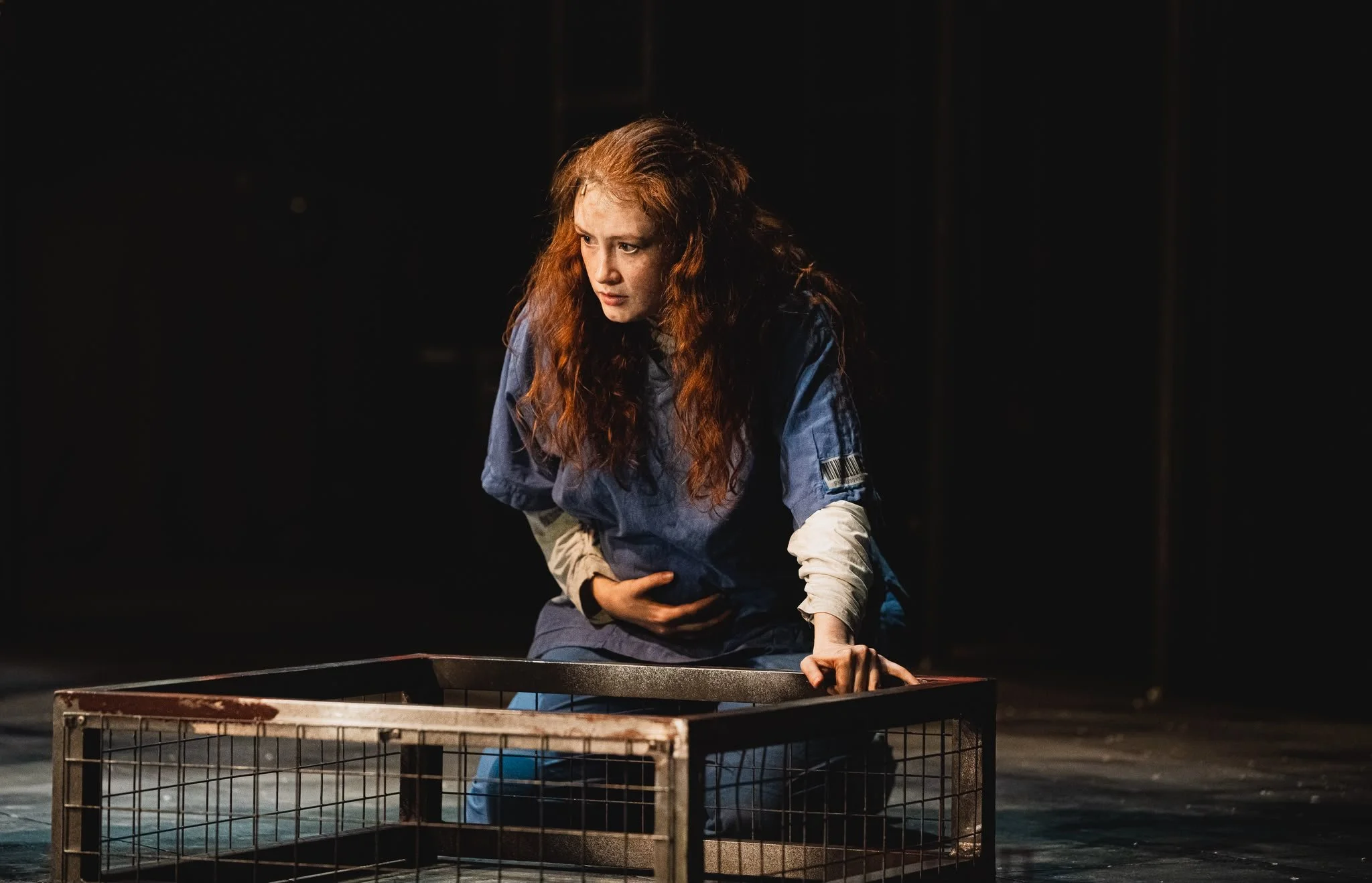
BYRIDIE SERVICE
Brydie Service is an actor and disability activist, best known for her roles in the Olivier- award nominated production of Animal Farm, Dickon in Regent Park's Open Air Theatre’s The Secret Garden, and Farah in Season 2 of BBC’s Here We Go.
